Thailand Wedding Legal Requirements for Foreigners: What You Need to Know
Win Wedding

August 1, 2026
Thailand is one of the world's most beloved wedding destinations — and the good news is that Thailand wedding legal requirements for foreigners are entirely manageable when you know the steps in advance. Whether you are planning an intimate beach ceremony in Koh Samui or a grand celebration in Chiang Mai, this guide will walk you through the legal process clearly and confidently, so you can focus on the joy of your special day.
It is important to understand that a legally recognised marriage in Thailand involves more than just a beautiful ceremony. There is a formal registration process that takes place at a Thai district office — known as the Amphur — and several documents must be prepared and authenticated beforehand. Let us walk through everything step by step.
Before anything else, both partners must visit their respective embassies or consulates in Bangkok. You will need to obtain an Affidavit of Freedom to Marry — sometimes called a Certificate of Marital Status or a Statutory Declaration. This document confirms that you are legally eligible to marry, meaning you are not already married to someone else.
Both partners must appear in person at their own country's embassy.
Bring your valid passport and any supporting documents your embassy may require.
Some embassies charge a fee for this service; contact your embassy in advance to confirm requirements.
Processing time varies — allow at least a few days, and book an appointment where required.
Common embassies that issue this affidavit in Bangkok include those of the United Kingdom, United States, Australia, Canada, Germany, France, and many others. Each embassy has its own specific form and procedure, so always check directly with your embassy website before your visit.
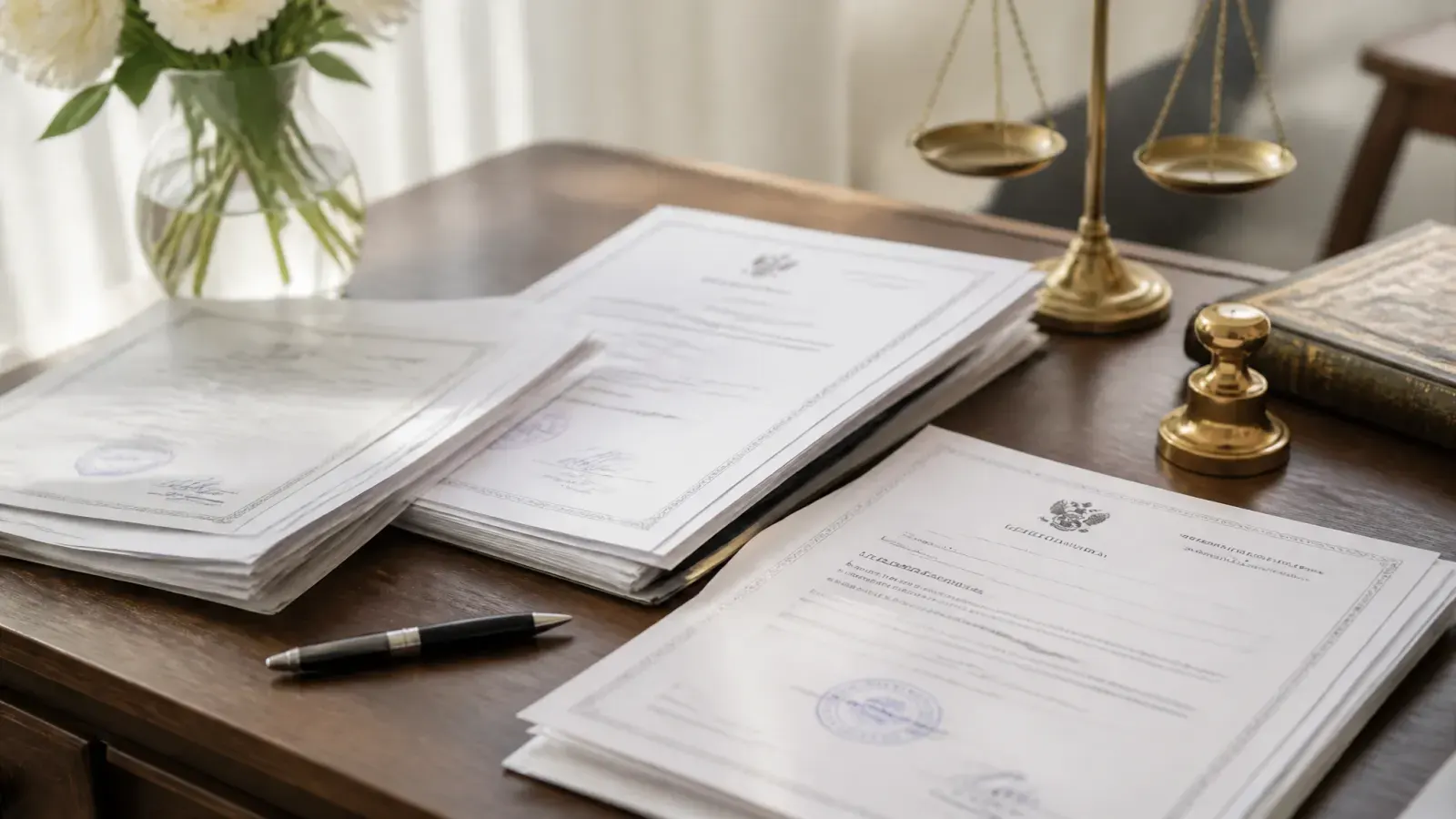
Once you have your affidavit from the embassy, it must be translated into Thai by a certified translator. The Thai district office will not accept documents in a foreign language without an accompanying official Thai translation.
Use a certified or legally recognised translation service in Thailand.
Both the original and the translated version must be submitted together.
Your passports will also need to be translated into Thai.
This step is often overlooked by couples until the last minute, so build extra time into your wedding timeline to allow for translation services. Many professional wedding planners in Thailand can recommend reliable translators who are experienced with marriage documentation.
After translation, your documents — including the affidavit and its Thai translation — must be legalised by the Thai Ministry of Foreign Affairs (MFA). This step is known as legalisation or certification, and it confirms that the signatures and seals on your documents are authentic.
The MFA has offices in Bangkok and Chiang Mai.
Allow one to three working days for processing in most cases.
Some embassies complete part of this process themselves — confirm with your embassy whether any pre-legalisation is needed on their end first.
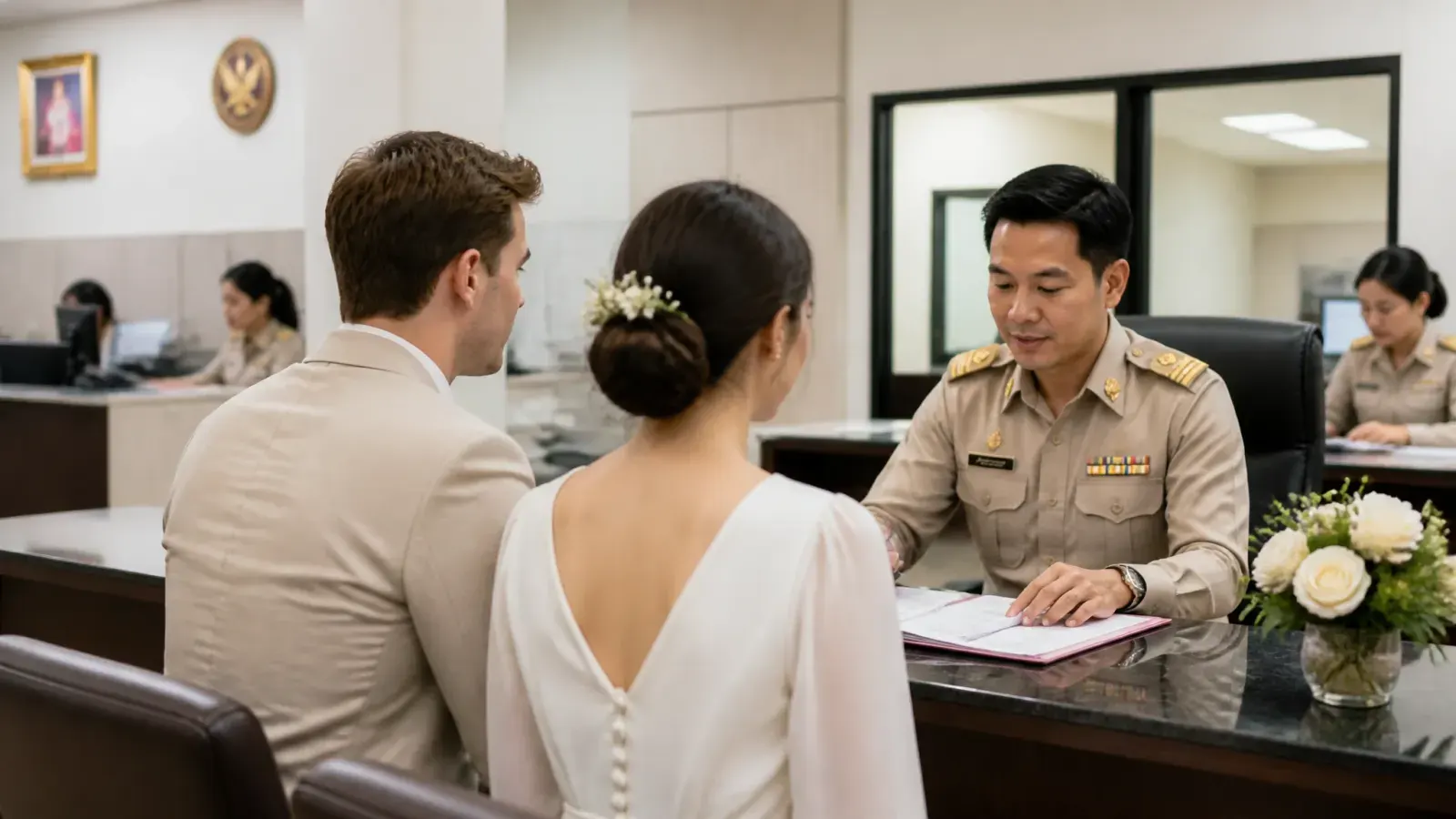
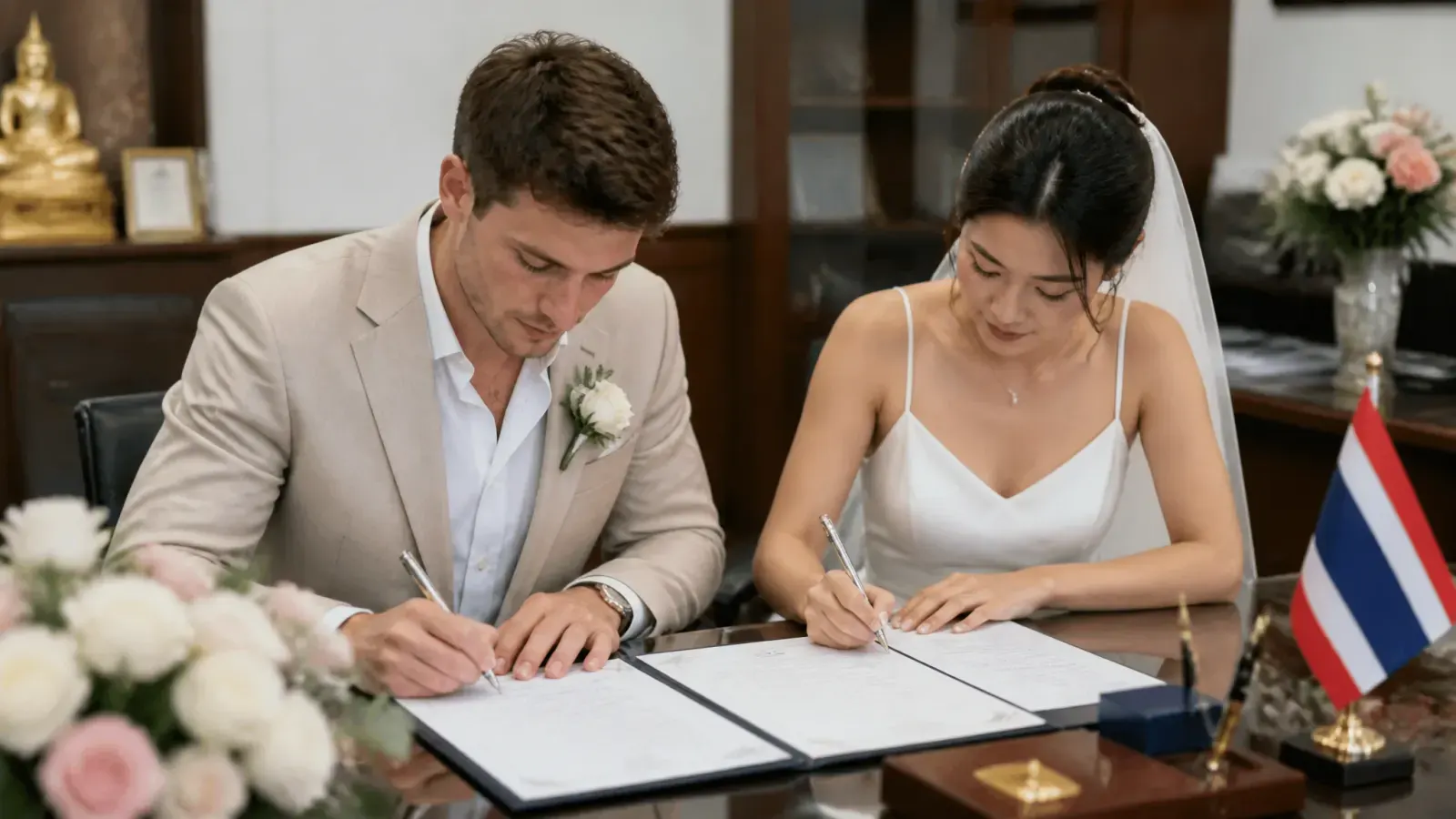
This is the most important step — the moment your marriage becomes legally recognised under Thai law. You and your partner must visit your local Thai district office, known as the Amphur, together in person.
Valid passports for both partners
The original embassy affidavit (Certificate of Freedom to Marry)
Certified Thai translation of the affidavit
MFA legalisation stamp on all relevant documents
Two witnesses who can present valid ID
A Thai district officer will review your documents and, once everything is in order, register your marriage and issue a Thai Marriage Certificate. This is an official government document — and it is the one that carries legal weight.
District offices are generally open Monday through Friday during business hours. The registration process itself can take as little as one to two hours if all your paperwork is complete. Some popular tourist districts may have staff with experience handling foreign couples, so it is worth researching which office to visit based on where your celebration is taking place.
You do not need to hold your ceremony at the district office — many couples complete the legal registration quietly on a weekday and then celebrate with their symbolic thai wedding ceremony surrounded by family and friends on their chosen date.
Once you have your Thai Marriage Certificate in hand, you will likely need to have it recognised in your home country as well. This typically involves:
Translating the Thai Marriage Certificate into your home country's language by a certified translator
Having the certificate apostilled or legalised through the Thai Ministry of Foreign Affairs
Submitting the authenticated certificate to the relevant registry or authority in your home country
Requirements differ by country, so always consult your home country's embassy or vital records office regarding their specific process for recognising a foreign marriage.
Start early. Begin gathering documents at least two to three months before your wedding date.
Double-check embassy requirements. Every country's embassy has slightly different rules and timelines.
Work with a local wedding planner. Experienced Thailand-based planners often have established relationships with translators and district offices, which can simplify the process enormously.
Keep multiple copies. Always carry certified copies of your key documents in case originals are needed for submission.
Confirm document validity dates. Some embassy affidavits are only valid for a limited period, so time your documents carefully around your Amphur appointment.
Navigating the legal side of a destination wedding may feel daunting at first, but with careful planning and the right support, it is entirely achievable. Thailand's process for foreign couples is well-established, and thousands of international couples successfully register their marriages here every year. Once the paperwork is complete, you are free to celebrate your love in one of the most breathtaking settings in the world — knowing that your union is fully recognised both in Thailand and back home.